OSHA's Ergonomics Showdown With Amazon Ends in a Corporate-Wide Settlement Covering Every US Warehouse
WASHINGTON — The biggest ergonomics enforcement push OSHA has mounted in over a decade ended not with a trial but with a signature. On December 19, 2024, the agency announced a corporate-wide settlement with Amazon resolving ergonomics citations at ten facilities and extending safety commitments to every Amazon fulfillment center, sortation center and delivery station under federal OSHA jurisdiction — several hundred thousand workers.
The Investigation
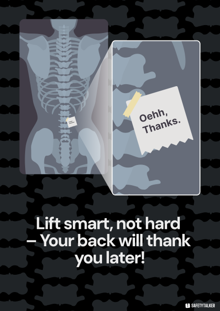
Starting in the summer of 2022, following referrals from federal prosecutors in New York, OSHA inspected Amazon warehouses across the country. In January 2023 it cited the company for ergonomic hazards at fulfillment centers in Deltona, Florida; Waukegan, Illinois; and New Windsor, New York, proposing $60,269 in penalties — the maximum available, since ergonomics has no dedicated standard and must be cited under the OSH Act’s General Duty Clause. Inspectors documented high-frequency lifting of heavy items, awkward twisting and bending postures, and long hours that together put workers at high risk of lower-back injuries and other musculoskeletal disorders. Similar citations followed at warehouses in Colorado, Idaho, New York and New Jersey through 2023.
“Each of these inspections found work processes that were designed for speed but not safety, and they resulted in serious worker injuries,” said Doug Parker, Assistant Secretary of Labor for Occupational Safety and Health, when the first citations landed.
The Settlement
With ten cases headed for trial in 2025, Amazon agreed to pay $145,000 — over 90% of the assessed penalties — and, more importantly, to structural changes: a corporate ergonomics team conducting annual risk assessments and piloting engineering controls, a designated Site Ergonomics Lead at every facility, multiple reporting channels for workers including anonymous ones, and biannual meetings with OSHA to review injury trends. “This corporate-wide settlement agreement focuses on improving conditions for several hundred thousand Amazon workers nationwide,” Parker said. OSHA keeps its full inspection and enforcement authority throughout.
Lessons to Take Home
Musculoskeletal injuries don’t make dramatic headlines — no explosion, no fall — yet they are among the most common serious workplace injuries in America, and this case proves OSHA can and will pursue them even without a specific ergonomics standard on the books (Congress repealed the last one in 2001, a story we tell in our history of OSHA).
For your own operation, the playbook is in the settlement itself: assess the lifting, reaching and twisting your job tasks actually demand; fix the worst of it with engineering — workstation heights, mechanical assists, rotation; and give workers an easy way to report the aches that come before the injuries, just as they would report any other near miss. Sore backs are data. Start collecting it, and remind your crew of all the reasons to work safe — including the ones that only show up twenty years later.