The Biggest OSHA Fines in History

The biggest OSHA fine in history is the $87.4 million proposed against BP in 2009 for failing to fix hazards after the Texas City refinery explosion that killed 15 workers. BP also holds second place ($21.4M, 2005), followed by IMC Fertilizer/Angus Chemical ($11.55M, 1991) and Imperial Sugar ($8.78M, 2008).
Most OSHA citations are measured in thousands of dollars. A handful are measured in millions — and each of those cases marks a disaster, a pattern of willful neglect, or both. This list ranks the largest penalties OSHA has ever issued, based on the agency’s own Top Enforcement Cases table, with the story behind each number. For how penalties are calculated in the first place, see the types of OSHA violations.
A note on the numbers: OSHA announces proposed penalties, which companies routinely contest and negotiate down. Where the final settlement is known, we include it.
1. BP Products North America — $87.4 Million (2009)
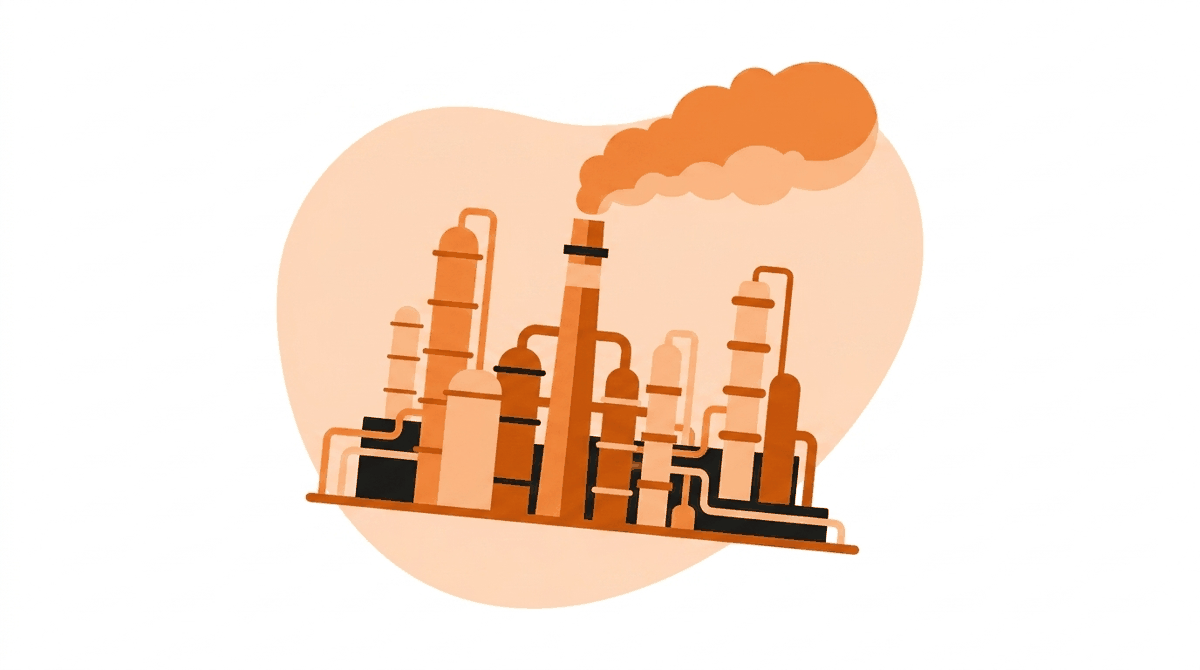
The all-time record. On March 23, 2005, an explosion at BP’s Texas City refinery killed 15 workers and injured 180. Four years later, OSHA concluded BP had failed to live up to its settlement obligations: the agency issued 270 failure-to-abate notices and 439 new willful violations of process safety management requirements, proposing $87,430,000 in penalties (recorded as $81.34 million issued in OSHA’s table). In August 2010, BP agreed to pay $50.6 million of the failure-to-abate portion and to spend at least $500 million on safety improvements at the refinery.
2. BP Products North America — $21.4 Million (2005)
The original Texas City citation, issued September 21, 2005, was itself the largest fine in OSHA history at the time: $21,361,500 for the explosion that killed 15. That both the #1 and #2 spots belong to the same facility is the entire lesson: the disaster wasn’t the end of the story — the failure to fix it was.
3. IMC Fertilizer / Angus Chemical — $11.55 Million (1991)
On May 1, 1991, an explosion at the nitroparaffins plant in Sterlington, Louisiana killed 8 workers and injured more than 100 people including nearby residents. OSHA issued $11,550,000 in penalties; the companies settled for $10 million the same day — at the time the largest settlement OSHA had ever reached.
4. Imperial Sugar — $8.78 Million (2008)
Sugar dust accumulated for years in the Port Wentworth, Georgia refinery exploded on February 7, 2008, killing 14 workers. OSHA proposed $8,777,500 across the Port Wentworth and Gramercy, Louisiana plants, including over a hundred willful dust violations, settling in 2010 for $6.05 million. The case transformed combustible dust enforcement — a hazard that still kills, as the Horizon Biofuels explosion and the Didion Milling criminal case show.
5. O&G Industries — $8.35 Million (2010)
On February 7, 2010, a natural gas blast during pipe-cleaning at the Kleen Energy power plant under construction in Middletown, Connecticut killed six workers. General contractor O&G Industries drew $8,347,000 in proposed penalties; contractor Keystone Construction & Maintenance drew another $6,623,000 from the same disaster (good for #10 on OSHA’s list).
6. Samsung Guam, Inc. — $8.26 Million (1995)
Cited September 21, 1995 over the Guam International Airport construction project, where OSHA found 118 willful violations — overwhelmingly fall protection and scaffolding failures — following a fatal fall. It remains one of the largest construction penalties ever issued.
7. CITGO Petroleum — $8.16 Million (1991)
Also from OSHA’s official table: $8,155,000 issued August 29, 1991, part of the era’s wave of refinery and chemical-plant enforcement following the Phillips 66 disaster.
8. Dayton Tire — $7.49 Million (1994)
$7,490,000 issued in April 1994, driven by machine guarding and lockout/tagout failures at the Oklahoma City tire plant — the same hazards that still dominate OSHA’s most-cited violations three decades later.
9. USX (U.S. Steel) — $7.28 Million (1989)
$7,275,300 issued October 26, 1989 against the steelmaker for widespread recordkeeping and safety violations at its Fairless Hills, Pennsylvania works — part of the 1980s “egregious” penalty policy that first pushed OSHA fines into the millions.
10. Phillips 66 / Fish Engineering — $6.4 Million (1990)
The October 23, 1989 vapor-cloud explosion at the Phillips 66 Houston Chemical Complex in Pasadena, Texas killed 23 workers and injured 314. OSHA proposed $5,666,200 against Phillips and $729,600 against contractor Fish Engineering; Phillips ultimately paid $4 million. The disaster led directly to the Process Safety Management standard of 1992 — the full story is in our guide to workplace disasters that changed safety law.
The Modern Cases Worth Knowing
Dollar General — over $26 million accumulated, $12 million settlement (2024). No single citation put Dollar General near the top of OSHA’s table; instead the discount retailer accumulated more than $26 million in proposed penalties from 2017 to 2024 for the same hazards over and over — blocked exits, blocked electrical panels, unsafe storage — at stores across the country, including the Wisconsin store cited for repeated electrical hazards. In July 2024 the company signed a corporate-wide settlement paying $12 million and committing to nationwide safety reforms. Read the whole saga in our news report.
Revoli Construction — $4.7 million (2026). A fatal trench collapse in Yarmouth, Massachusetts brought 57 violations — 7 willful and 33 repeat — and $4,699,362 in proposed penalties, one of the largest sums OSHA has proposed against a small employer.
Cintas — $2.78 million (2007). After worker Eleazar Torres-Gomez died in an operating industrial dryer at the uniform company’s Tulsa laundry, OSHA issued 42 willful lockout/tagout citations — then the largest penalty ever proposed against a service-industry employer.
For a picture of what more routine six-figure enforcement looks like, see our roundup of the highest OSHA fines of 2020.
Conclusion
Two patterns run through every case on this list. First, the biggest fines are almost never about a single mistake — they are about willful, repeated, or uncorrected hazards, which multiply penalties per instance. Second, the fine is never the real cost: BP’s $87 million came after 15 funerals and hundreds of injuries. The cheapest moment to act is before the inspection — start by auditing your site against the most common OSHA violations and building a culture where near misses get reported before they become catastrophes.
References and Further Reading
- OSHA: Top Enforcement Cases Based on Total Issued Penalty
- OSHA announces $50.6 million BP payment (2010)
- IMC Fertilizer / Angus Chemical settlement agreement
- Dollar General corporate-wide settlement (OSHA, July 2024)
- A Short History of OSHA: 1970 to Today
- Workplace Disasters That Changed Safety Law
- What Are the Types of OSHA Violations?