Dropped Objects Toolbox Talk: Tools at Height
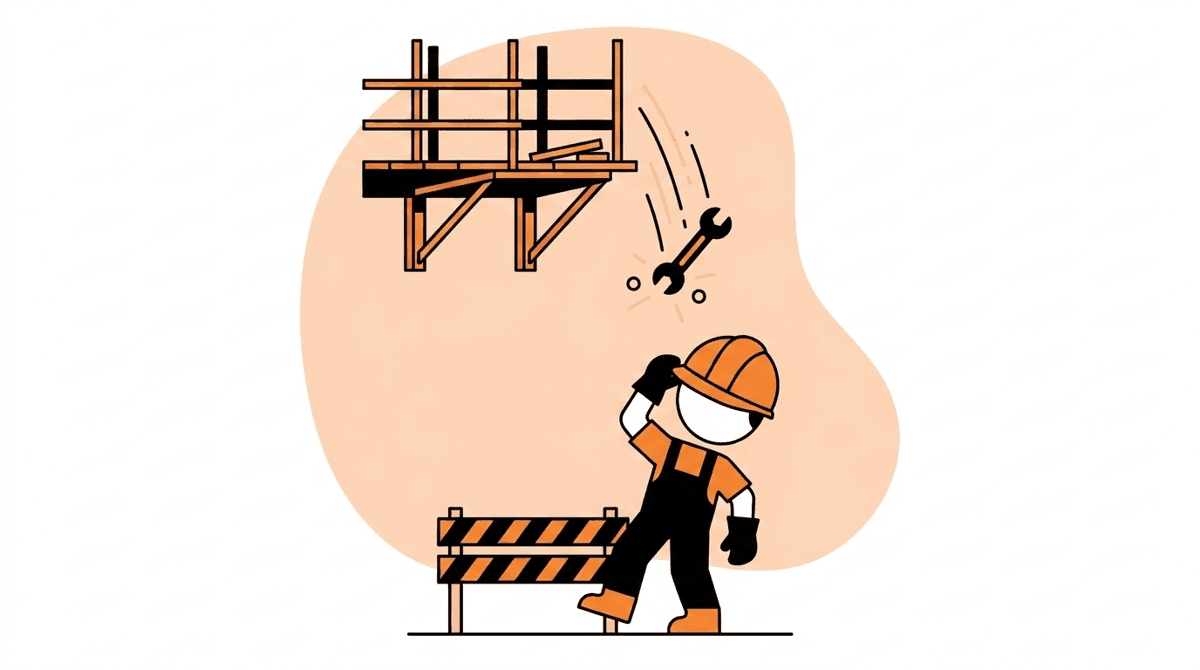
Gravity never takes a break. Every tool, bolt, offcut and phone that goes up a scaffold, lift or steel frame is a potential projectile for everyone working below. A tape measure weighs less than a pound, but dropped from a few stories it arrives with enough force to overwhelm a hard hat.
Struck-by incidents are one of OSHA’s construction “Focus Four” killers, and dropped objects are a huge slice of that. The worst part? The person who gets hit almost never made the mistake. Someone above them did.
If it can fall, it will fall — secure it, tether it, or keep people out from under it.
Why is dropped objects safety important?
According to the Bureau of Labor Statistics, workers killed after being struck by falling, propelled or suspended objects number in the hundreds every year — 394 died that way in 2023 alone. Thousands more take a hit that ends a workday, a career, or a life as they knew it.
The physics are unforgiving. Falling objects bounce, deflect off steel, and travel sideways — which is why “I wasn’t standing directly under it” comes up in so many incident investigations. If you’re anywhere in the drop zone, you’re in the line of fire.
And unlike a fall, where the person at risk controls their own harness, a dropped object transfers all the risk to somebody who may never see it coming. Controlling it is a duty we owe each other.
OSHA regulations for dropped objects
Several construction standards deal directly with falling object protection:
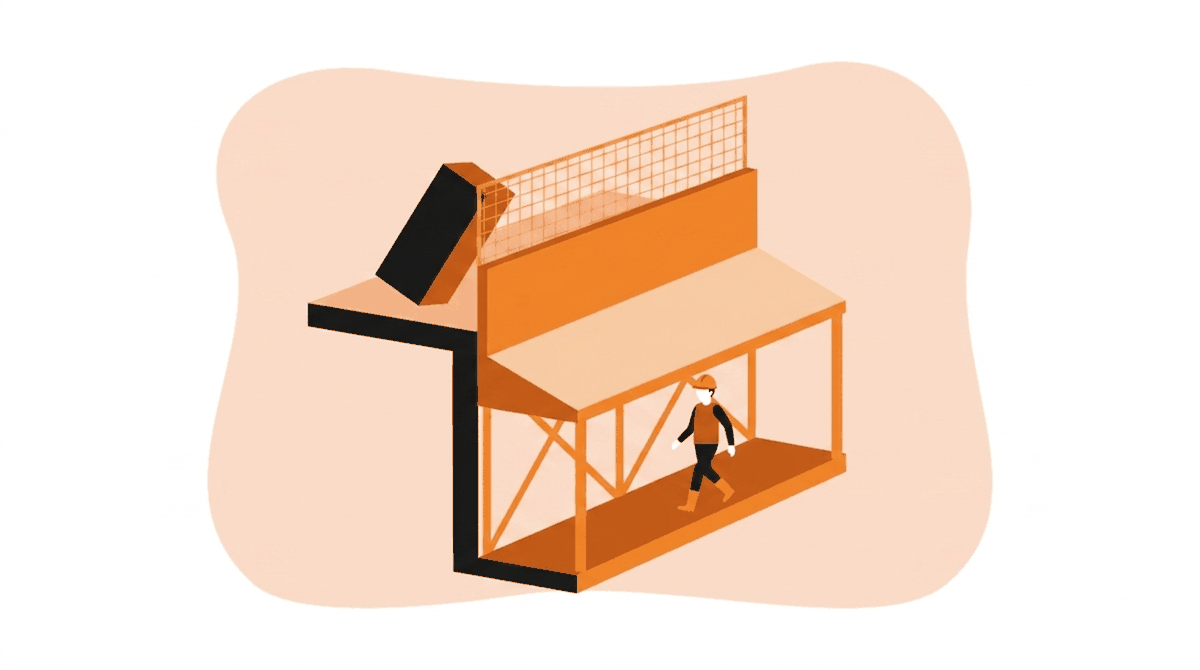
- 29 CFR 1926.501(c) — Where falling objects are a danger, employers must make workers below wear hard hats, and must either erect toeboards, screens or guardrail systems to stop objects falling, use canopies, or barricade the area below and keep people out.
- 29 CFR 1926.502(j) — Toeboards must be at least 3.5 inches tall and withstand 50 pounds of force. Material stacked higher than the toeboard needs paneling or screening.
- 29 CFR 1926.451(h) — On scaffolds, workers below must be protected by barricades, toeboards, screens or debris nets.
- 29 CFR 1926.100 — Head protection is required wherever falling objects could cause head injury. Our head protection talk goes deeper on hard hat types.
- 29 CFR 1926.250 — Materials stored on elevated surfaces must be stacked, racked or secured so they can’t fall.
Note what OSHA’s hierarchy implies: the hard hat is the last layer, not the plan. The plan is stopping the object from falling in the first place.
Dropped objects hazards
These mini-scenarios come from patterns investigators see over and over:
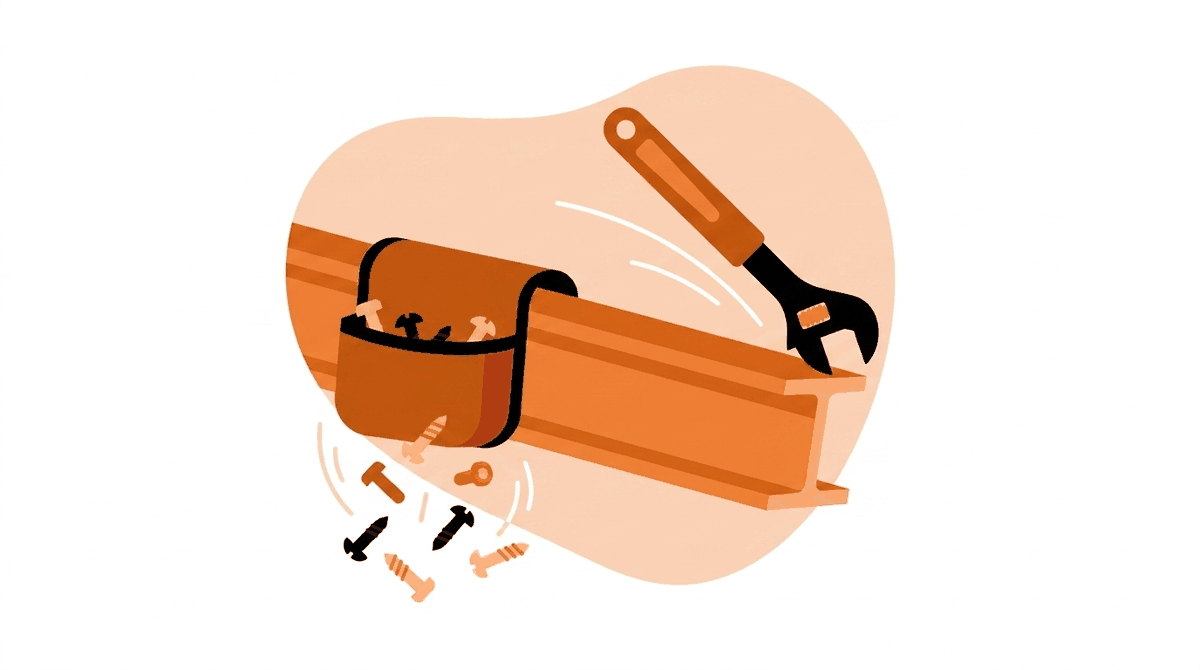
- An ironworker lays a spud wrench on a beam flange “for a second.” A gust, a vibration, or his own boot sends it 40 feet down onto a finisher.
- A scaffold platform has no toeboards. A block offcut gets nudged off the deck and lands next to a laborer mixing mud — a near miss this time.
- A worker in a boom lift carries loose bits, screws and a phone in an open pouch. He leans over the rail and the pouch tips.
- Demo debris is tossed off the edge instead of going down a chute, and the “controlled” drop zone has no barricade — just a guy who was told to watch out.
- A pallet of material is stacked above toeboard height near a leading edge with no screen or netting.
Dropped objects toolbox talk
Everybody look up for a second. Whatever is above your head right now — scaffold decks, lifts, steel, other trades — that’s where today’s talk lives.
If you’re working at height, everything you take up is your responsibility until it comes back down in your hand or in a hoisted container. Three habits. First, tether your tools: lanyards on wrenches and drills, closed-top pouches for fasteners and small parts, no exceptions for “just a minute” tasks. Second, nothing loose near an edge — no tools resting on rails, no material leaning on toeboards, no phone in your chest pocket when you lean over. Third, housekeeping: offcuts and debris go in a bucket or down a chute, never kicked aside where the next boot sends them over.
If you’re working below, respect the barricades. A taped-off drop zone isn’t a shortcut opportunity — it’s somebody telling you a hazard exists overhead. If you must work under an active area, coordinate with the crew above first so they stop the overhead work, and keep your hard hat on.
And here’s the crew-level habit: before starting overhead work, ask “who’s below me?” Before working at ground level, ask “who’s above me?” Two questions, five seconds, and they close the gap where most struck-by injuries happen.
One more thing: report every dropped object, even the ones that land harmlessly. A wrench that hits dirt today hits a head next month if we don’t fix why it fell. Near misses are free lessons — take them.
Questions to employees
Ask your crew — a quick check that the talk landed:
- What overhead work is happening on our site today, and who is working below it?
- What are the three ways OSHA allows us to protect workers below (besides hard hats)?
- Which of your tools could be tethered right now but aren’t?
- Why can standing “near” a drop zone still get you hurt?
- What should you do before starting a task directly above another trade?
- When did you last report a dropped object or near miss?
Promote dropped objects safety with this email template
Hi [Name],
With multiple trades working at height this week, I want everyone focused on dropped object prevention:
- Tether tools when working at height, and use closed containers for fasteners and small parts.
- Keep platforms clean — toeboards in place, nothing loose near edges, debris down chutes or in buckets.
- Respect all barricaded drop zones below overhead work. Never enter one while work is active above.
- Hard hats on at all times in work areas.
If you drop anything from height — even if it lands harmlessly — report it so we can fix the cause. The next one might not miss.
Thanks,
[Your Name]
Conclusion
Dropped objects punish the people who least deserve it — the ones who happened to be underneath. Every one of these incidents is preventable with the same short list: tether it, toeboard it, contain it, barricade below, and talk between crews about who’s above whom. Gravity is undefeated, so don’t give it anything to work with.