Hazard Communication Toolbox Talk: Read the Label, Know the Chemical
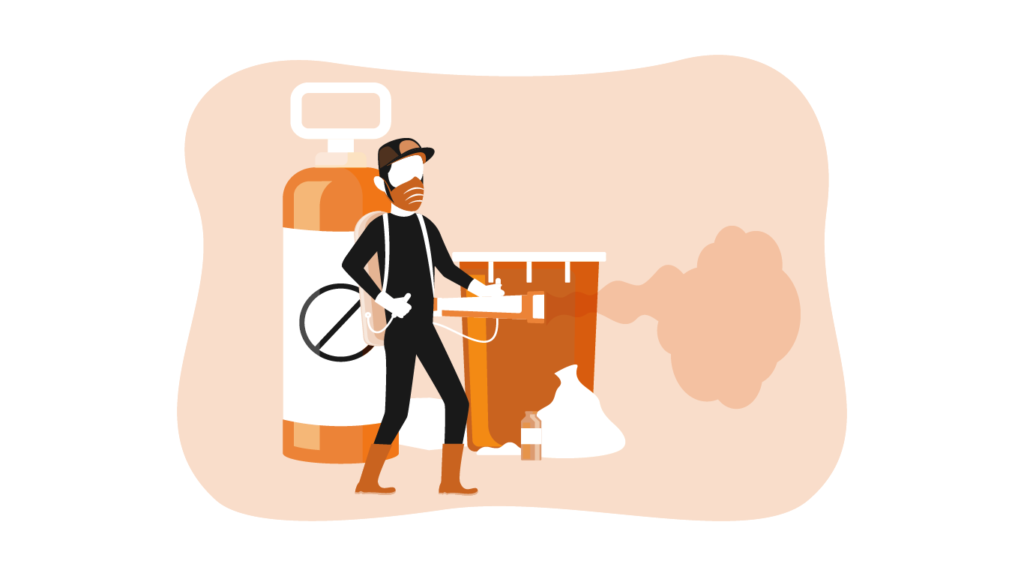
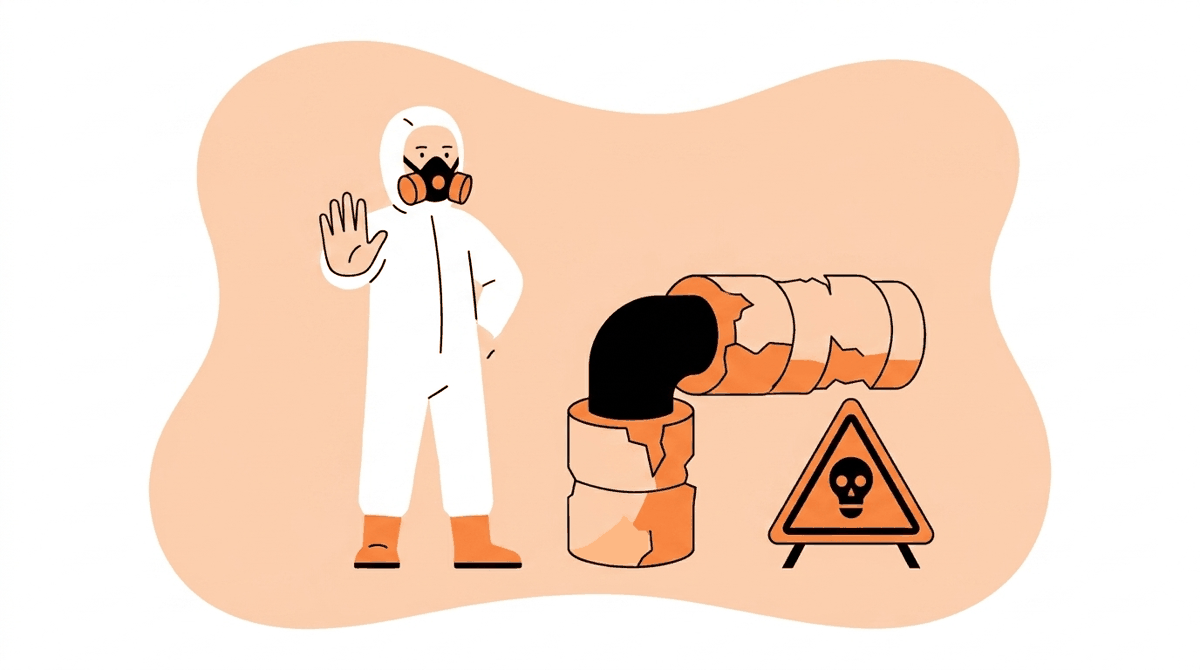
Every chemical on this site is trying to tell you something. The label on the drum, the pictograms on the jug, the safety data sheet in the binder — that’s the chemical’s biography: what it does to you, how it gets into you, and what to do when something goes wrong.
Hazard communication — HazCom — is the system that guarantees you get that information. OSHA calls it your “right to know.” But a right you don’t use protects nobody. A label nobody reads is just a sticker.
The five seconds it takes to read a label can save you a lifetime of regret.
Why is hazard communication safety important?
Chemical harm is bigger and quieter than most people think. OSHA reports that workers suffer more than 190,000 illnesses and 50,000 deaths annually related to chemical exposures — most of them not from dramatic spills, but from routine exposure to substances people didn’t fully understand: solvents, degreasers, dusts, fumes.

Some chemicals burn you today. Others — sensitizers, carcinogens, lung hazards — collect their price years later. The label and the safety data sheet (SDS) are how you find out which kind you’re holding before it touches your skin or your lungs.
There’s also a compliance reality: hazard communication sits near the top of the most common OSHA violations year after year — usually for missing programs, missing SDSs, and unlabeled secondary containers. If you want a deeper dive into specific substances, see our hazardous chemicals safety talk.
OSHA regulations for hazard communication
The standard is 29 CFR 1910.1200 — Hazard Communication, aligned with the Globally Harmonized System (GHS). In plain English, your employer must have:
- A written HazCom program covering the chemicals on site.
- An inventory of hazardous chemicals in the workplace.
- Labels on every container — shipped containers carry the full GHS label (product identifier, signal word, pictograms, hazard statements, precautionary statements, supplier info), and workplace containers must be labeled too.
- Safety data sheets for every hazardous chemical, in a consistent 16-section format, accessible to workers during every shift.
- Training on the hazards, the labels, and where to find the SDSs — before you work with the chemical, not after.
OSHA’s hazard communication page has the full picture, including the pictogram guide.
Hazard communication hazards
Where HazCom breaks down in real workplaces:
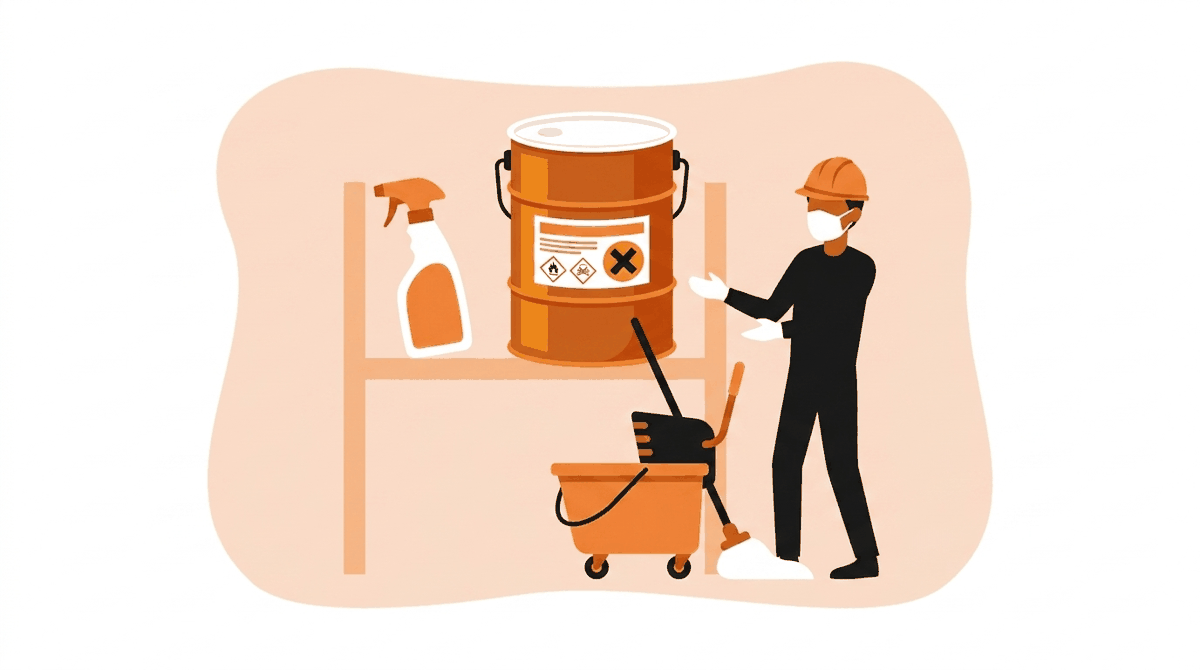
- The unlabeled spray bottle. Someone decants degreaser into a water bottle “just for today.” Six months later a new hire mistakes it for water. Secondary containers need labels — chemical name and hazards, minimum.
- Mixing incompatibles. Bleach and an acid-based cleaner meet in a mop bucket and produce chlorine gas. The labels warned about it; nobody read them.
- Wrong glove, wrong job. A solvent that walks straight through latex gets handled with latex gloves because nobody checked Section 8 of the SDS.
- “It’s just cleaner.” Familiar products — cleaners, adhesives, paints — cause a huge share of chemical injuries precisely because nobody respects them.
- SDS binder from 2015. Chemicals changed, binder didn’t. When someone gets splashed, the emergency instructions are for a product you no longer use.
Hazard communication toolbox talk
Let’s make this practical: what should you actually do with a label and an SDS?
Start with the label, every time you pick up a chemical you haven’t used recently. Three things in five seconds. First, the signal word: “Danger” means severe hazards, “Warning” means less severe — that word alone sets your caution level. Second, the pictograms: the flame means flammable, the skull means it can kill you quickly, the corrosion symbol means it eats skin and metal, and the one that looks like an exploding chest — the health hazard symbol — means long-term damage like cancer or organ harm. Third, the precautionary statements: they tell you the PPE and the storage rules in one or two lines.
Then know your SDS. You don’t need to memorize sixteen sections — you need four. Section 2: what the hazards are. Section 4: first aid, what to do if it’s on you or in you. Section 6: what to do if it spills. Section 8: exactly which gloves, glasses, and respiratory protection the job needs. Everyone here should know where the SDSs are kept — physical binder or terminal — and be able to pull one in under a minute. If you can’t, tell me today and we’ll fix that.
Two hard rules. One: no unlabeled containers, ever. If you transfer a chemical into a spray bottle or bucket, it gets a label before it gets used. If you find a mystery container, don’t smell it, don’t use it — bring it to me. Two: never mix chemicals unless the procedure says so. Some combinations make gas that will drop you in a closed room.
The chemicals will tell you everything you need. Make reading their story a habit. Questions?
Questions to employees
Ask your crew — a quick check that the talk landed:
- What do the signal words “Danger” and “Warning” tell you?
- Which GHS pictograms are on the chemicals you use most?
- Where are the safety data sheets on this site, and how fast can you find one?
- Which SDS sections tell you about first aid and required PPE?
- What’s the rule for secondary containers like spray bottles?
- What would you do if you found an unlabeled container of liquid?
Promote hazard communication safety with this email template
Hi [Name],
As we update the chemical inventory this month, please reinforce the HazCom basics with your team:
- Read the label — signal word, pictograms, precautions — before using any chemical
- Every secondary container (spray bottles, buckets) gets a label before use
- Know where the SDS station is and check Section 8 for the right PPE before new tasks
- Never mix chemicals outside of written procedures
Chemical exposure contributes to more than 190,000 worker illnesses a year, most from routine products people stopped reading the labels on. Five seconds of reading is cheap protection.
Thanks,
[Your Name]
Conclusion
HazCom works when the information moves the last three feet — from the label into your decisions. Read the signal word and pictograms before you pour, know your four key SDS sections, label every container, and never mix what the label says not to. The right to know only protects the people who use it.