Carbon Monoxide Toolbox Talk: The Gas You'll Never See Coming
Carbon monoxide is the perfect ambush. It has no color, no smell, no taste, and it doesn’t irritate your eyes or throat. It comes from equipment we use every day — generators, engines, heaters, compressors, power washers — and it builds up anywhere exhaust can’t escape. By the time you feel it, you’re already poisoned.
What makes CO especially cruel is how it works: it hijacks your red blood cells so your blood quietly stops delivering oxygen to your brain and heart. You get a headache. You feel tired. You get confused — and confusion is the symptom that stops you from saving yourself.
You can’t see it, smell it, or taste it — carbon monoxide gives you no warning, only symptoms.
Why is carbon monoxide safety important?
According to the CDC, unintentional carbon monoxide poisoning not linked to fires kills more than 400 Americans every year, sends more than 100,000 people to emergency departments, and hospitalizes more than 14,000. On the job, the classic scenario is horribly consistent: fuel-powered equipment running in an enclosed or partially enclosed space — a garage, a basement, a container, an excavation, a building with the doors closed against the cold.
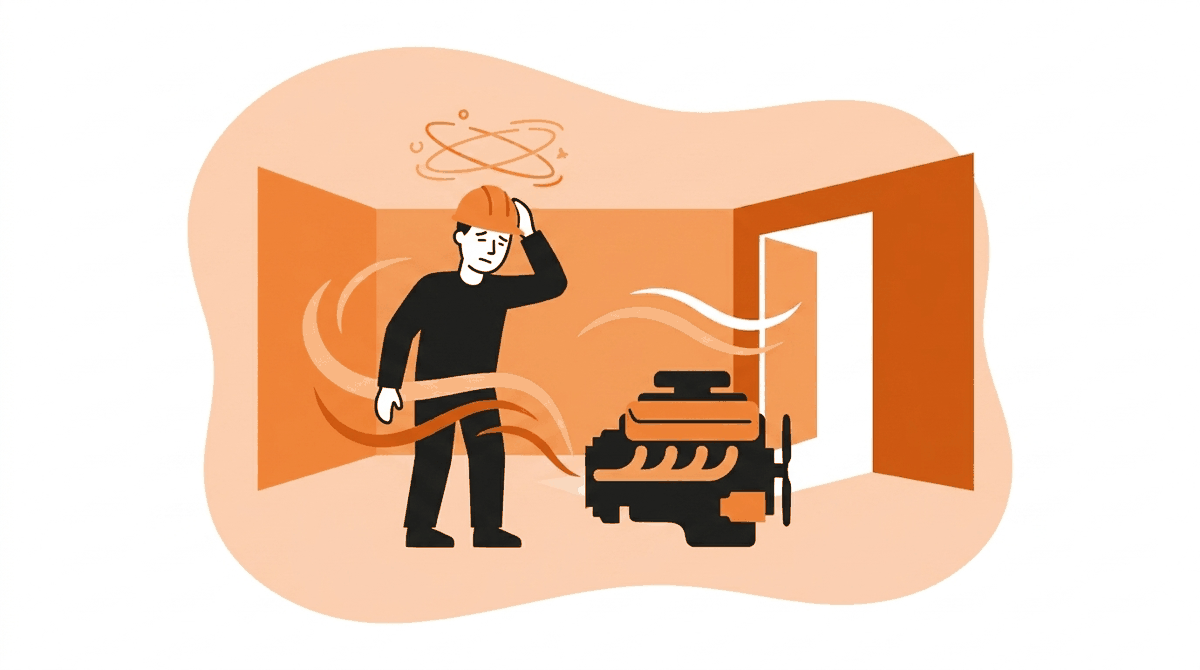
That last detail matters: CO incidents spike in winter, when crews pull generators and heaters inside and seal up buildings. That’s why we cover this talk every year in our January safety topics. And because CO accumulates in low, enclosed areas, it’s also one of the recurring killers in confined spaces — BLS data lists it among the most common gases in fatal confined space inhalations.
OSHA regulations for carbon monoxide
There’s no single “CO standard” — the requirements come from several places:
- 29 CFR 1910.1000, Table Z-1 sets OSHA’s permissible exposure limit for carbon monoxide at 50 parts per million (ppm) averaged over an 8-hour shift. Construction has a matching limit under 1926.55.
- NIOSH recommends tighter limits: a recommended exposure limit of 35 ppm as an 8-hour average with a 200 ppm ceiling that should never be exceeded, per the NIOSH Pocket Guide.
- OSHA’s carbon monoxide fact sheet lays out employer duties in plain terms: ventilate, maintain equipment, monitor air where CO can accumulate, and never use gasoline-powered equipment indoors or in poorly ventilated areas.
- In permit-required confined spaces, 29 CFR 1910.146 requires atmospheric testing that includes toxic gases like CO before and during entry.
Carbon monoxide hazards
The setups that poison workers:
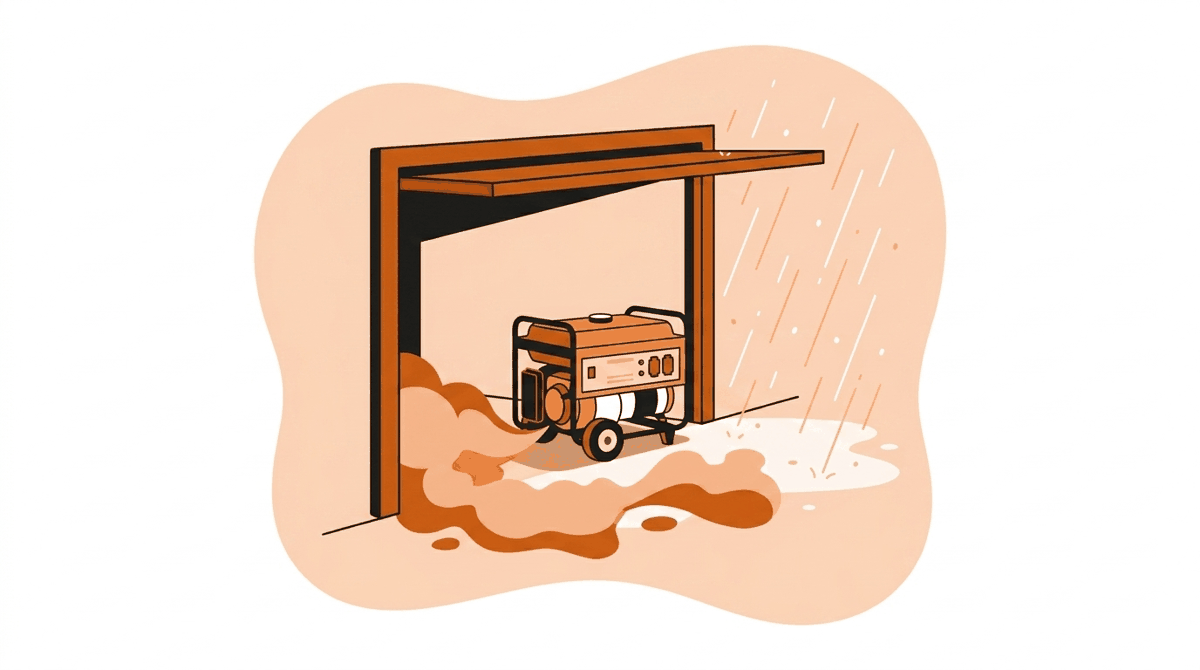
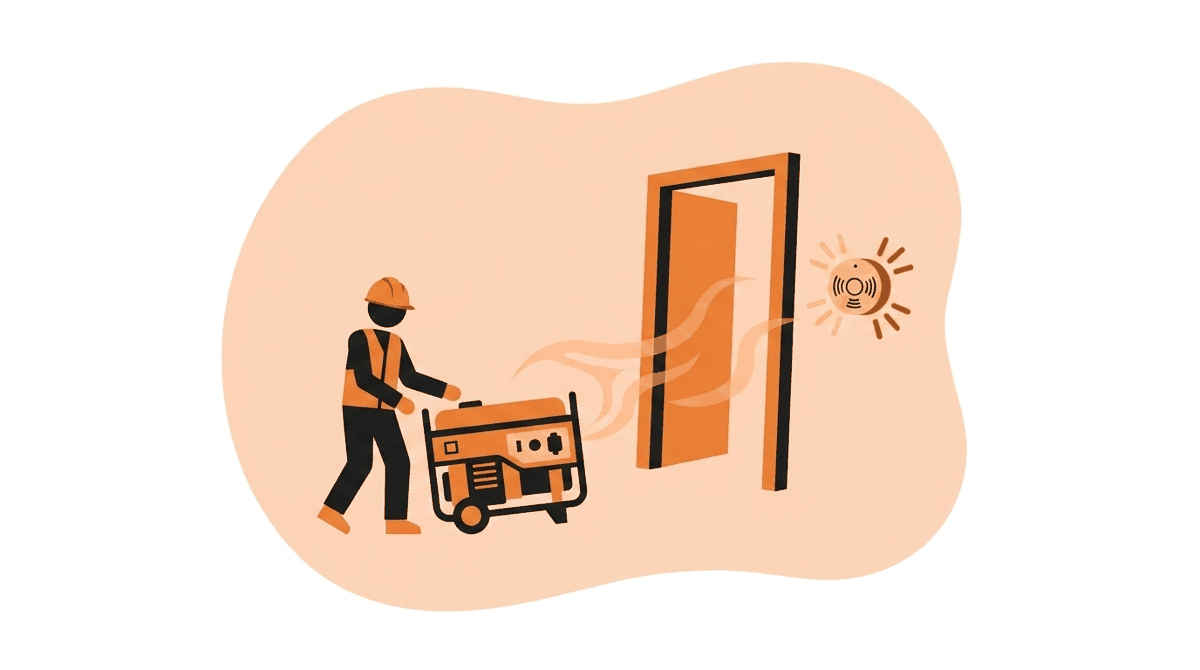
- The generator moved indoors. Rain starts, someone drags the portable generator into the garage or just inside the doorway. “Near the door” is not ventilation — CO pools and drifts inward.
- Heaters in sealed buildings. Fuel-fired heaters running overnight in a buttoned-up structure greet the morning crew with a toxic atmosphere.
- Engines idling in shops. Trucks and equipment idling in the shop with the doors down “for just a few minutes.”
- Power washers and cut-off saws with gas engines used in basements, tanks, and containers.
- Exhaust drift. Equipment running outside, exhaust pointed at an air intake, doorway, or excavation where a crew is working below grade.
- Ignored symptoms. A crew all developing headaches and blaming the weather, the coffee, or the flu — the classic missed warning of a building CO problem.
Carbon monoxide toolbox talk
Here’s a question for the crew: if carbon monoxide were leaking into this room right now, how would you know? You wouldn’t. The only warnings you get are a detector’s alarm or your own symptoms — and by the time symptoms arrive, the poisoning has started.
So learn the symptoms cold: headache, dizziness, weakness, nausea, chest pain, confusion. And watch for the pattern — you feel lousy at work and better when you leave, or several people in the same area get sick at once. Flu doesn’t hit four people in the same basement at the same hour. CO does.
Now the prevention rules. One: gasoline and diesel equipment stays outside — well away from doors, windows, and air intakes, exhaust pointed away from people and openings. “The garage with the door open” is where CO deaths happen, not a safe compromise. If a job truly requires an engine in an enclosed area, that’s a planned task with mechanical ventilation and air monitoring — not an on-the-spot decision.
Two: trust detectors, not noses. Where fuel-fired heaters or engines run near enclosed work, CO monitors run too. If an alarm sounds, you leave — get to fresh air, count heads, and report it. Never reset an alarm to finish the job.
Three: if someone shows symptoms, get them to fresh air immediately and call for medical help. Severe CO poisoning can affect the heart and brain even after the exposure ends — it’s not a “walk it off” situation.
This gas kills people who were twenty feet from fresh air and didn’t know they needed it. Respect the invisible. Questions?
Questions to employees
Ask your crew — a quick check that the talk landed:
- What are the early symptoms of carbon monoxide poisoning?
- Why is running a generator “just inside the doorway” dangerous?
- What pattern of symptoms across a crew suggests CO instead of illness?
- Where do we use CO detectors on this site, and what do you do when one alarms?
- Which of our equipment produces carbon monoxide?
- What do you do if a coworker seems confused or dizzy near running equipment?
Promote carbon monoxide safety with this email template
Hi [Name],
With cold weather moving in and heaters coming out, please review our carbon monoxide rules with your team:
- All gasoline and diesel equipment runs outdoors, away from doors, windows, and intakes — no exceptions for rain or cold
- Fuel-fired heaters in enclosed areas require ventilation and a working CO monitor
- If a CO alarm sounds, evacuate to fresh air and report it — never silence and continue
- Crew-wide headaches, dizziness, or nausea get treated as a CO event until proven otherwise
CO poisoning kills more than 400 Americans a year and gives no warning you can see or smell. Detectors and discipline are our only defense.
Thanks,
[Your Name]
Conclusion
Carbon monoxide wins by being invisible — so beat it with rules that don’t depend on your senses. Keep engines outdoors, ventilate and monitor any enclosed area near combustion, believe every alarm, and treat crew-wide symptoms as an emergency. Nobody should lose their life to exhaust from a generator that could have sat ten feet further from the door.