Confined Space Toolbox Talk: The Air In There Can Kill You
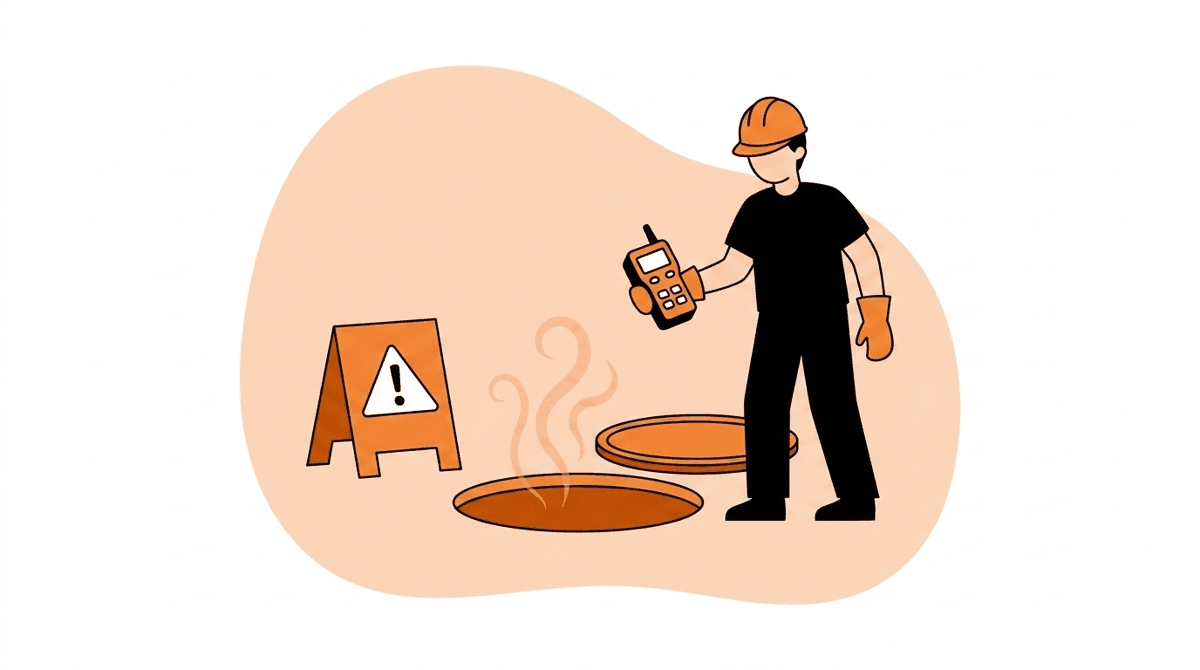
A confined space doesn’t have to look dangerous. A tank, a manhole, a pit, a silo, a pump room, a crawl space — most of them look like nothing more than a cramped, inconvenient place to work. That’s the trap. The most dangerous thing about a confined space is usually something you can’t see or smell: air that can’t support life.
And confined spaces have a horrifying signature: they kill in multiples. A worker goes down, a coworker goes in after them, and then another. The space that dropped one person in seconds does the same to every rescuer who enters unprotected.
If a coworker collapses in a confined space, the air that dropped them is waiting for you.
Why is confined space safety important?
From 2011 to 2018, 1,030 workers died from occupational injuries involving confined spaces, according to the Bureau of Labor Statistics. Among the killers: inhalation of harmful substances — with hydrogen sulfide and carbon monoxide leading the list — plus engulfment, trench collapses, and falls.
The multiple-fatality pattern is real, and recent. At a Colorado dairy farm in 2025, a disconnected manure pipe released hydrogen sulfide; six workers died, most of them trying to rescue the ones who went down first. At Foundation Food Group in Georgia, a liquid nitrogen release displaced the air in a freezer area; six workers died, including people who came to help. Nitrogen has no color and no smell — the victims never knew the air was gone.
NIOSH has warned for decades that would-be rescuers make up a large share of confined space deaths. Good instincts plus bad air equals more victims.
OSHA regulations for confined spaces
Two main standards apply:

- 29 CFR 1910.146 — Permit-Required Confined Spaces for general industry
- 29 CFR 1926 Subpart AA (1926.1201–1213) for construction
A confined space is big enough to enter, has limited ways in and out, and isn’t designed for continuous occupancy. It becomes permit-required when it also has a serious hazard: a dangerous atmosphere, engulfment material, converging walls, or any other serious threat.
For permit spaces, employers must identify and post them, keep unauthorized workers out, and run a written permit program: atmospheric testing before and during entry, ventilation, an attendant stationed outside, defined roles for entrants and supervisors, and a rescue plan that doesn’t depend on untrained coworkers rushing in.
Confined space hazards
What actually goes wrong:
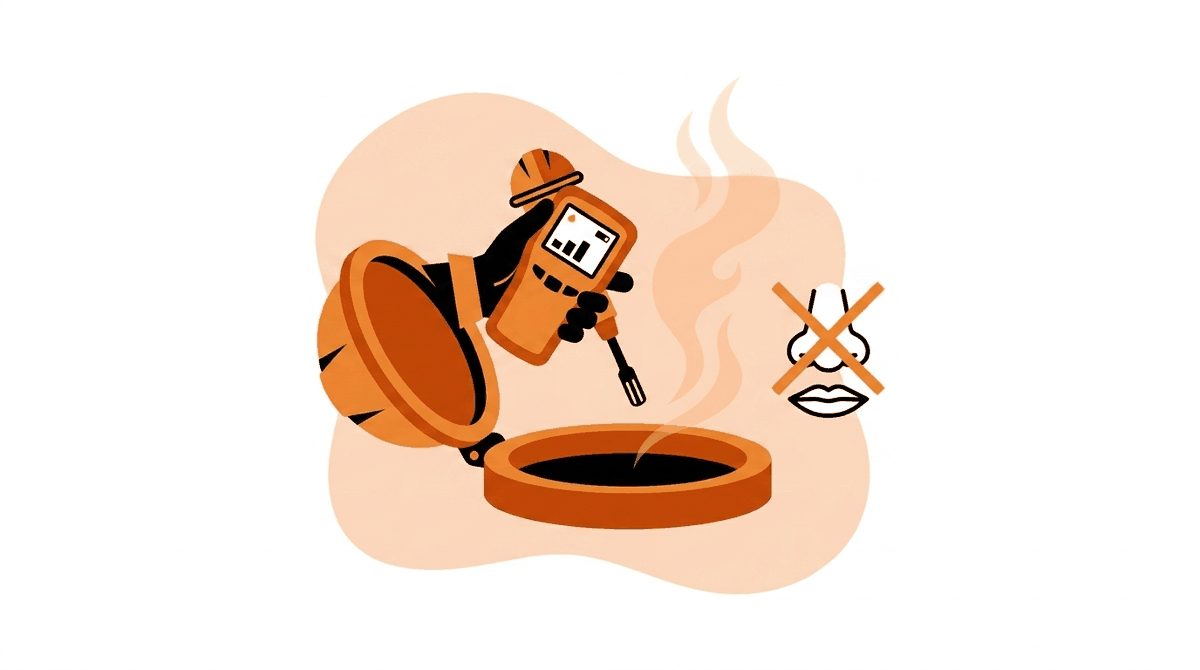
- Oxygen deficiency. Rust, fermentation, purge gases, or displacement by nitrogen or argon can quietly strip the oxygen from a space. A few breaths of oxygen-free air can cause collapse — you won’t feel it coming.
- Toxic gases. Hydrogen sulfide from manure and sewage, carbon monoxide from engines, solvent vapors in tanks. H2S deadens your sense of smell at high concentrations — the “rotten egg” warning disappears exactly when the danger peaks.
- Flammable atmospheres. Vapors in a tank plus one spark from a tool.
- Engulfment. Grain, sand, sawdust, or liquid that flows in or shifts. Waist-deep engulfment in grain can be impossible to escape.
- The unofficial confined space. A pit or tank nobody labeled, entered “just for a second” to grab a dropped tool.
Confined space toolbox talk
I want to tell you about two incidents, because they’re the same story told twice. In Colorado, a manure system pipe let go and released hydrogen sulfide. Two workers went to stop the flow and collapsed. Four more went in after them. Six dead. In Georgia, liquid nitrogen displaced the air near a freezer, workers collapsed mid-step, and several of the dead were the ones who came to help. Six dead there too.
Here’s what those twelve deaths teach us. First: your senses are worthless in a confined space. Nitrogen is invisible and odorless. Hydrogen sulfide kills your nose before it kills you. The only thing that knows whether the air is safe is a calibrated gas meter — tested before entry and monitored the whole time you’re in there.
Second: no permit, no entry. If a space on this site is posted as permit-required, nobody goes in without a signed permit, tested air, ventilation running, an attendant at the opening, and rescue arranged in advance. And if you find an unlabeled pit, tank, or vault that seems like it might qualify — treat it like it does and ask. Use your stop work authority if anyone is about to enter without the paperwork.
Third, and this is the hard one: if someone goes down inside a space, you do not go in after them. I know everything in you will scream to go in. That instinct is what turned one victim into six — twice. Your job is to stay out, raise the alarm, call the rescue team, and feed them information. The trained rescuers with air supplies are that person’s best chance. You going down beside them is their worst. Questions?
Questions to employees
Ask your crew — a quick check that the talk landed:
- What makes a confined space “permit-required”?
- Why can’t you trust your nose to detect dangerous air?
- What has to be in place before anyone enters a permit space?
- What is the attendant’s job during an entry?
- If an entrant collapses, what do you do — and what do you never do?
- Are there any unmarked spaces on this site that might qualify as confined spaces?
Promote confined space safety with this email template
Hi [Name],
Before the upcoming tank and vault work, please review the confined space basics with your crew:
- No entry into any permit-required space without a completed permit, atmospheric testing, and ventilation
- An attendant stays at the opening for the entire entry — no exceptions
- Rescue is planned before entry; coworkers never enter to attempt a rescue
- Report any unlabeled pits, tanks, or vaults so we can evaluate them
BLS counted over 1,000 confined space deaths in eight years, and many victims were would-be rescuers. The permit process is what keeps a bad moment from becoming a mass casualty.
Thanks,
[Your Name]
Conclusion
Confined spaces kill quietly, quickly, and in groups. The defense is discipline: test the air with a meter, enter only under a valid permit with an attendant outside, and never attempt an unequipped rescue no matter how strong the urge. Every rule in the permit program was written from a funeral. Follow all of them, every entry.