Lockout/Tagout Toolbox Talk: Control Hazardous Energy Before It Kills
Every machine on this site looks harmless when it’s switched off. That’s exactly what makes servicing equipment so dangerous. A conveyor that “can’t start,” a press that’s “just being cleaned,” a breaker someone flips back on because they didn’t know you were inside the panel — that’s how workers lose fingers, arms, and lives.
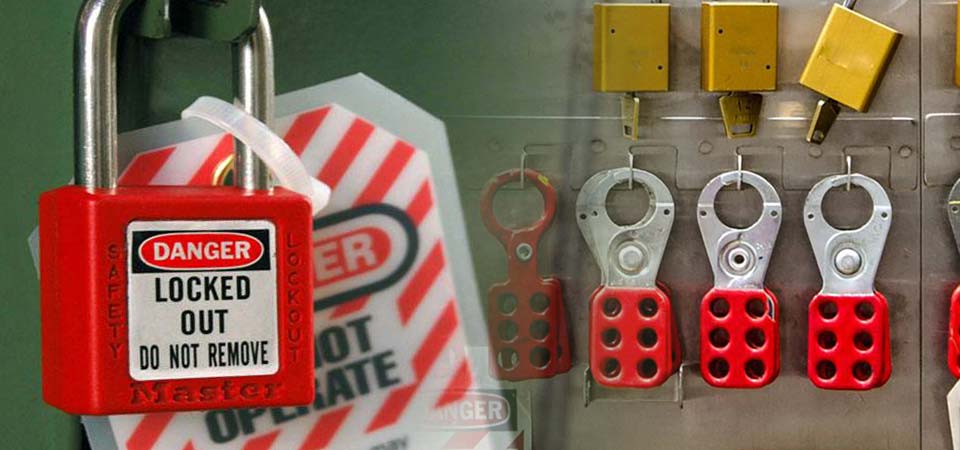
Lockout/tagout (LOTO) is the procedure that keeps stored and live energy under your control while you service or maintain equipment. It’s not paperwork. It’s the only thing standing between your hands and a machine that doesn’t know you’re in it. If you want the full step-by-step procedure, read our detailed guide to the lockout/tagout steps.
If you didn’t lock it and tag it, the machine is still live — treat it that way.
Why is lockout/tagout safety important?
The numbers make the case better than any lecture. OSHA estimates that compliance with the lockout/tagout standard prevents about 120 fatalities and 50,000 injuries every year. Workers injured by hazardous energy releases lose an average of 24 workdays recovering. And roughly 3 million workers — craft workers, machine operators, electricians, laborers — service equipment routinely and face this risk every shift.
Hazardous energy isn’t only electricity. It’s hydraulic pressure in a cylinder, air in a compressed line, a raised blade held up by gravity, a spring under tension, steam in a pipe, chemicals in a valve. Any of them can release the moment you open a guard or pull a jam.
It doesn’t take a big machine either. OSHA cited Waupaca Foundry after two workers suffered amputations just 11 days apart — both while clearing or working near running equipment that should have been locked out.
OSHA regulations for lockout/tagout
The main standard is 29 CFR 1910.147, The Control of Hazardous Energy (Lockout/Tagout). In plain English, it requires your employer to:
- Write energy control procedures for each machine that can release hazardous energy during service.
- Provide locks, tags, and devices — and make sure each authorized worker uses their own.
- Train authorized employees (who apply locks) and affected employees (who work around locked-out equipment).
- Audit the procedures at least once a year.
Related standards include 29 CFR 1910.333 for electrical work practices. LOTO violations show up year after year on OSHA’s list of most common OSHA violations — mostly because crews skip the procedure on “quick” jobs.
Lockout/tagout hazards
These are the situations that hurt people:
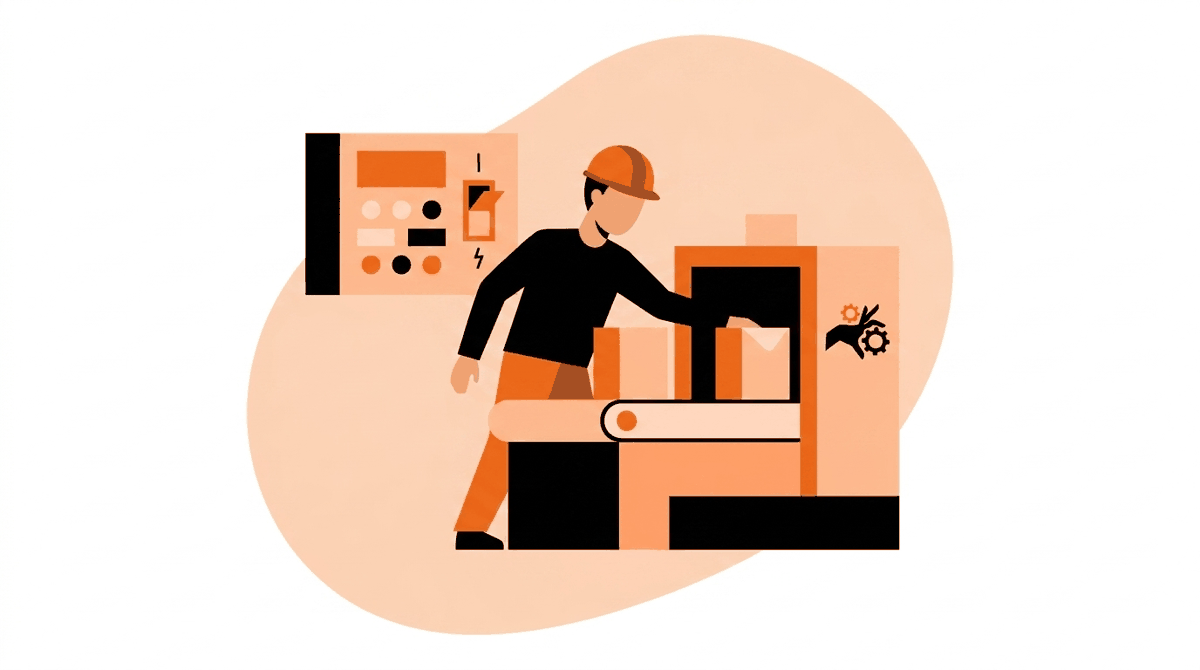
- A worker reaches into a packaging machine to clear a jam. A coworker on the other side restarts it. The machine doesn’t know whose hand is inside.
- A maintenance tech locks out the electrical disconnect but forgets the hydraulic system. The ram drifts down while he’s under it.
- Someone tags a breaker but doesn’t lock it. A supervisor in a hurry removes the tag and re-energizes the line.
- A “two-minute job” on a mixer — no lock applied — turns into an entanglement because the agitator was on a timer.
- Stored energy in a capacitor or spring releases after the power is off, because nobody verified zero energy.
Many of these overlap with pinch point hazards — moving parts and human hands in the same space at the same time.
Lockout/tagout toolbox talk
Let’s talk about the moment that gets people hurt: the machine is off, the job is small, and you’re in a hurry. That’s when someone reaches in without locking out — and that’s when we lose fingers.
Here’s the rule on this crew: if any part of your body goes where a machine could move, that machine gets locked out first. No exceptions for quick jobs. Most amputations happen on “quick jobs.”
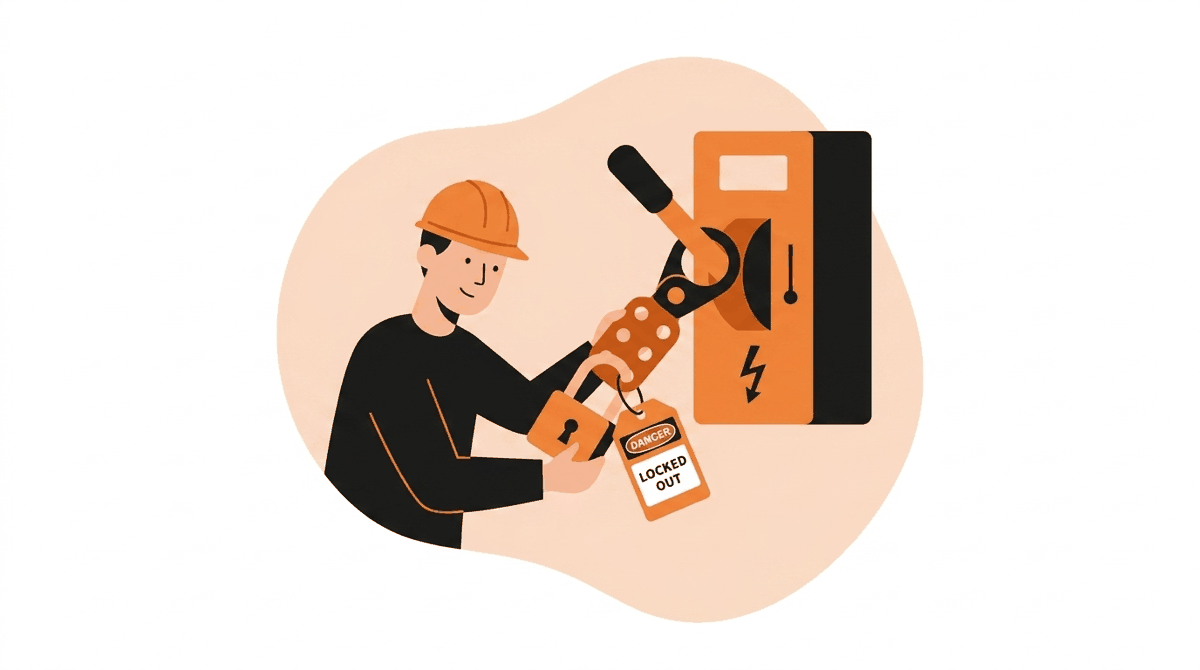
Remember the six steps. One: prepare — know what energy sources feed the machine. Electricity, air, hydraulics, gravity, springs. Two: shut it down using the normal stopping procedure. Three: isolate every energy source — disconnects, valves, blocks. Four: apply your own lock and your own tag. Your lock, your key, your life. Nobody else’s lock protects you. Five: release or restrain stored energy — bleed the air lines, block the raised parts, let things cool or spin down. Six: verify. Try to start it. If it moves, you’re not done.
When you see a lock and tag on equipment, that’s another person’s hands in that machine. You never remove someone else’s lock. You never start equipment with a tag on it. If a lock is still on at shift change and you can’t find the owner, get a supervisor — there’s a formal process for that, and it isn’t “cut it off.”
And if you haven’t been trained and authorized for lockout, your job is simple: don’t service, don’t clear jams, don’t reach in. Call someone who is authorized. Questions before we wrap up?
Questions to employees
Ask your crew — a quick check that the talk landed:
- What energy sources feed the equipment you work on — besides electricity?
- What are the six steps of lockout/tagout?
- Why do you verify the machine won’t start before working on it?
- What do you do if you find someone else’s lock on equipment you need?
- When is it OK to clear a jam without locking out? (Hint: it isn’t.)
- Who on this crew is authorized to apply locks?
Promote lockout/tagout safety with this email template
Hi [Name],
Quick reminder ahead of this week’s maintenance work: every service task on powered equipment requires full lockout/tagout — including jam clearing, cleaning, and adjustments.
Before any work starts:
- Identify and isolate all energy sources, not just electrical
- Apply your personal lock and tag — one lock per worker
- Release stored energy and verify zero energy before reaching in
If a machine doesn’t have a written energy control procedure, stop and let me know before starting the job. OSHA estimates lockout/tagout compliance prevents 120 deaths a year — let’s make sure none of the exceptions happen here.
Thanks for keeping each other safe,
[Your Name]
Conclusion
Lockout/tagout only works when it’s applied every single time, on every job, no matter how small. The machine doesn’t distinguish between a two-minute jam and a two-hour overhaul — and neither should you. One lock, one tag, one verified zero-energy state before anyone reaches in. That habit is worth 120 lives a year.