Machine Guarding Toolbox Talk: The Guard Is There for a Reason
Every guard on every machine in this plant exists because someone, somewhere, got hurt without it. Guards are not there to slow you down. They are there to keep your hands attached to your arms.
The problem is that guards get in the way of production — or at least it feels that way. So they get removed for cleaning and never put back. They get bypassed because the machine jams less without them. They get zip-tied open because it saves four seconds a cycle. And then a hand goes where a hand should never be.
A machine guard you removed can’t protect the next person who didn’t know it was gone.
Why is machine guarding safety important?
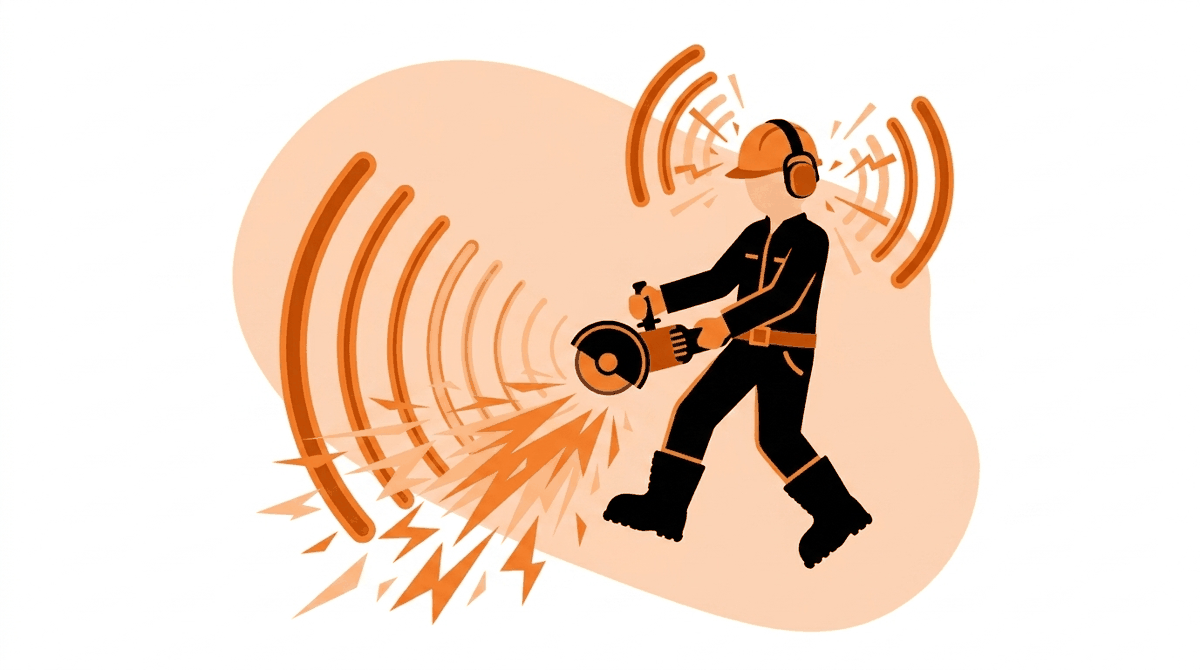
Machines don’t give second chances. According to the U.S. Bureau of Labor Statistics, machinery was involved in 58 percent of work-related amputations in 2018 — 3,580 cases in a single year. Points of operation, in-running nip points, rotating shafts, and flying chips or sparks are the classic culprits.

You don’t have to look far for real examples. OSHA fined Waupaca Foundry $234,385 after two workers suffered amputations 11 days apart — one clearing jammed parts from a conveyor, one caught between a part and a grinding wheel. And at a Georgia Piggly Wiggly, a worker lost four fingers in a meat grinder while cleaning it — a coworker stepped on the foot pedal while his hand was inside.
Notice the pattern: cleaning, clearing jams, servicing. Machine guarding and lockout/tagout fail together. The guard was off because of the task, and the energy wasn’t controlled.
OSHA regulations for machine guarding
The core general industry standards are:
- 29 CFR 1910.212 — General Requirements for All Machines: one or more methods of guarding must protect operators and other employees from hazards like point of operation, nip points, rotating parts, flying chips, and sparks.
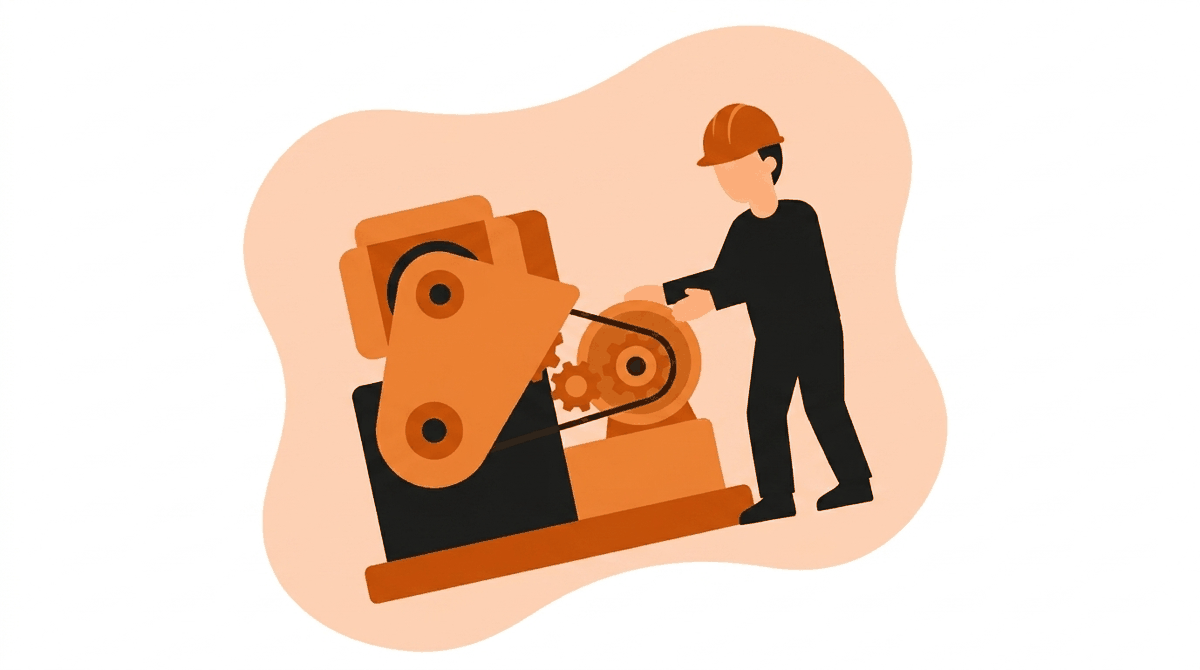
- 29 CFR 1910.219 — Mechanical Power-Transmission Apparatus: belts, pulleys, chains, sprockets, and shafting must be guarded.
- 29 CFR 1910.217 — Mechanical Power Presses: specific requirements for presses, including two-hand controls and presence-sensing devices.
The plain-English version: if a machine part moves and a person can reach it, it must be guarded. Guards must be secure, must not create new hazards, and must not be easy to defeat. OSHA’s machine guarding page has more detail.
Machine guarding hazards
Watch for these on the floor:
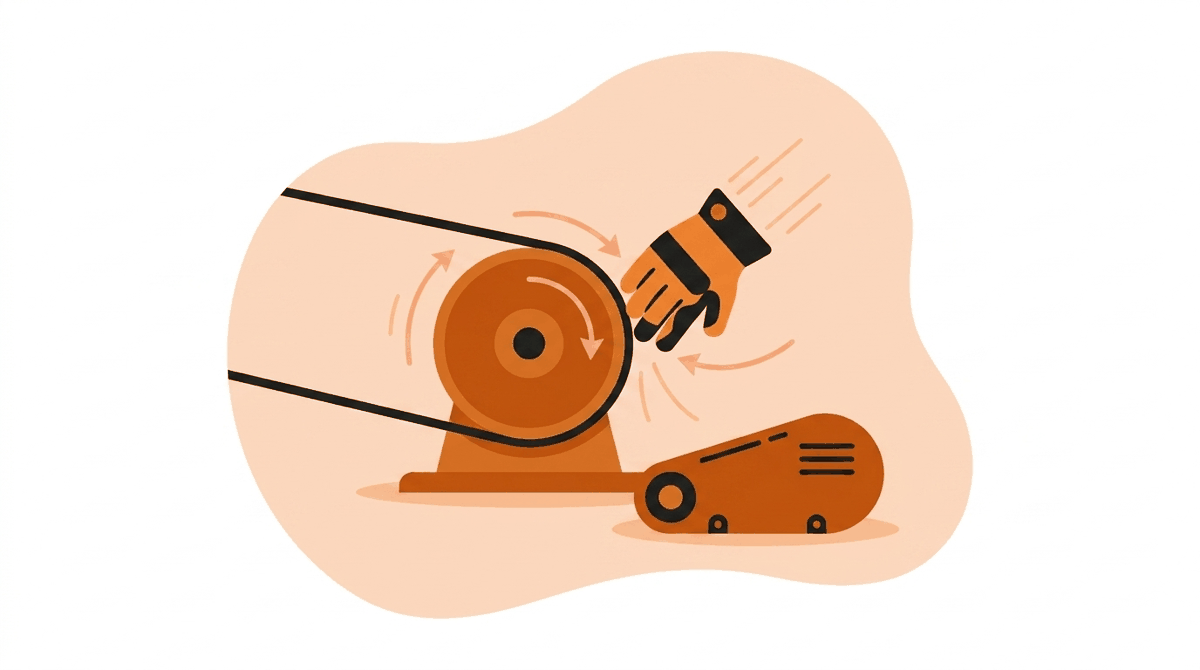
- Missing guards after maintenance. The guard came off for a repair Friday afternoon and Monday’s operator never knew it existed.
- In-running nip points. Where a belt meets a pulley or two rollers meet, anything that touches the pinch gets pulled in — glove first, hand second. Our pinch points talk covers these in depth.
- Bypassed interlocks. A tape-over-the-sensor trick turns a safety door into decoration.
- Rotating shafts. A smooth, slow shaft looks harmless until it catches a sleeve, glove, or lanyard.
- Home-made “fixes.” A piece of cardboard is not a guard. Neither is standing to the side.
Machine guarding toolbox talk
Here’s what I want everyone thinking about today: the guard that isn’t there.
When a guard is in place, it does its job quietly and nobody thinks about it. The danger shows up when a guard is missing, loose, or bypassed — and the machine looks exactly the same as it did yesterday. Same noise, same speed, same job. The only difference is that today there’s nothing between the nip point and your fingers.
So here are the rules on this floor. One: before you start any machine, take five seconds and look. Are all guards in place and tight? Is the interlock working? If a guard is missing or damaged, don’t run the machine. Tag it, tell me, and we’ll fix it. Nobody here will ever get in trouble for stopping a machine over a missing guard.
Two: guards only come off for maintenance, and only with the machine locked out. If your task requires removing a guard, that task requires lockout/tagout. Period. That’s exactly how the Waupaca amputations happened — hands in running machines that should have been locked out.
Three: never reach around, over, or under a guard while the machine is moving. If material jams, stop the machine, lock it out, then clear it. A jam costs minutes. A hand costs everything.
Four: never defeat an interlock. If an interlock is slowing the job down so much that people are tempted to bypass it, that’s a process problem — bring it to me and we’ll solve it properly instead of gambling with fingers.
The BLS counted 3,580 machinery amputations in one year. Every one of them happened to someone who had done that same task safely a hundred times before. Look for the missing guard. Questions?
Questions to employees
Ask your crew — a quick check that the talk landed:
- Which machines in your area have points of operation or nip points?
- What do you check before starting a machine at the beginning of a shift?
- What should you do if you find a guard missing or damaged?
- When is it acceptable to remove a guard — and what must happen first?
- Have you ever seen an interlock bypassed here? What happened?
- Why do most machine injuries happen during cleaning and jam clearing?
Promote machine guarding safety with this email template
Hi [Name],
During this week’s walkthrough, please give machine guarding a hard look in your area:
- Confirm every guard is in place, secured, and undamaged
- Test that interlocked doors actually stop the machine
- Check that guards removed during recent maintenance were reinstalled
- Report any bypassed sensors or improvised guards immediately
Machinery was involved in 58 percent of workplace amputations in a recent BLS count. Guards only work when they’re on the machine — if anything is missing, tag the machine out and let me know before it runs.
Thanks,
[Your Name]
Conclusion
Machine guards are the last line of defense between moving steel and human hands. Check them before every shift, keep them on unless the machine is locked out, and never bypass an interlock to save a few seconds. If a guard is missing, the machine doesn’t run — that one habit prevents most of the amputations OSHA investigates.